Individual Psychotherapy for adults, adolescents, and children
From a licensed therapist (LCAT, RDT/BCT, TEP)
Working from a psychodynamic, relational, and creative lens, I will meet you where you are and work with you to create a space grounded in trust, curiosity, and acceptance.
Our work may begin with talking. At other times, we might use imagery, metaphor, movement, role exploration, or other creative and experiential approaches to help you express what feels difficult to name. When appropriate, we may also incorporate attachment-focused EMDR.
Together, we can explore the experiences, relationships, and roles that have shaped you; make space for feelings that may have been pushed aside; and strengthen your ability to respond to life with greater freedom and flexibility. Therapy is not about becoming someone else. It is about having more choice in how you live, connect, and care for yourself and expanding the range of roles available to you.
Individual psychotherapy sessions are generally 45 minutes and take place weekly, online. We will determine together which approaches feel most helpful and appropriate for you.

Attachment-Focused EMDR
Sometimes experiences stay with us long after they are over. They may show up as anxiety, overwhelm, self-doubt, disconnection, painful relationship patterns, or simply a feeling that something has never been fully resolved.
EMDR or Eye Movement Desensitization and Reprocessing is a therapeutic approach that can help the brain and body process experiences that have remained emotionally charged or unfinished. The goal is not to erase what happened, but to help it feel less present and less powerful, allowing for greater ease, flexibility, and choice.
My EMDR training is through the Parnell Institute, whose attachment-focused approach places particular emphasis on safety, trust, and the therapeutic relationship. Before approaching difficult material, we spend time developing internal and relational resources so that you feel supported and grounded. Healing is not about pushing through. It is about creating enough safety and support to gently process what you have been carrying.
Attachment-focused EMDR may be helpful for:

Trauma and difficult past experiences
Anxiety and feelings of overwhelm
Grief and loss
Attachment wounds
Life transitions
Negative beliefs about yourself
Relationship patterns that continue to repeat
Experiences of feeling stuck despite understanding why
EMDR is always collaborative and tailored to your individual needs. We will decide together whether and when it feels right to include it in your therapy.
Group Therapy
We are shaped in relationship, and relationships can also become powerful places for healing.
Group therapy offers something individual therapy cannot: the opportunity to experience yourself with others in real time. Within a consistent and supportive community, you can explore how you connect, protect yourself, take up space, respond to conflict, and move toward or away from what you need.
The group becomes a place to practice new ways of relating while receiving support, perspective, and honest feedback from others. Over time, participants may feel less alone, more confident expressing themselves, and more able to create the kinds of relationships they want outside the group.
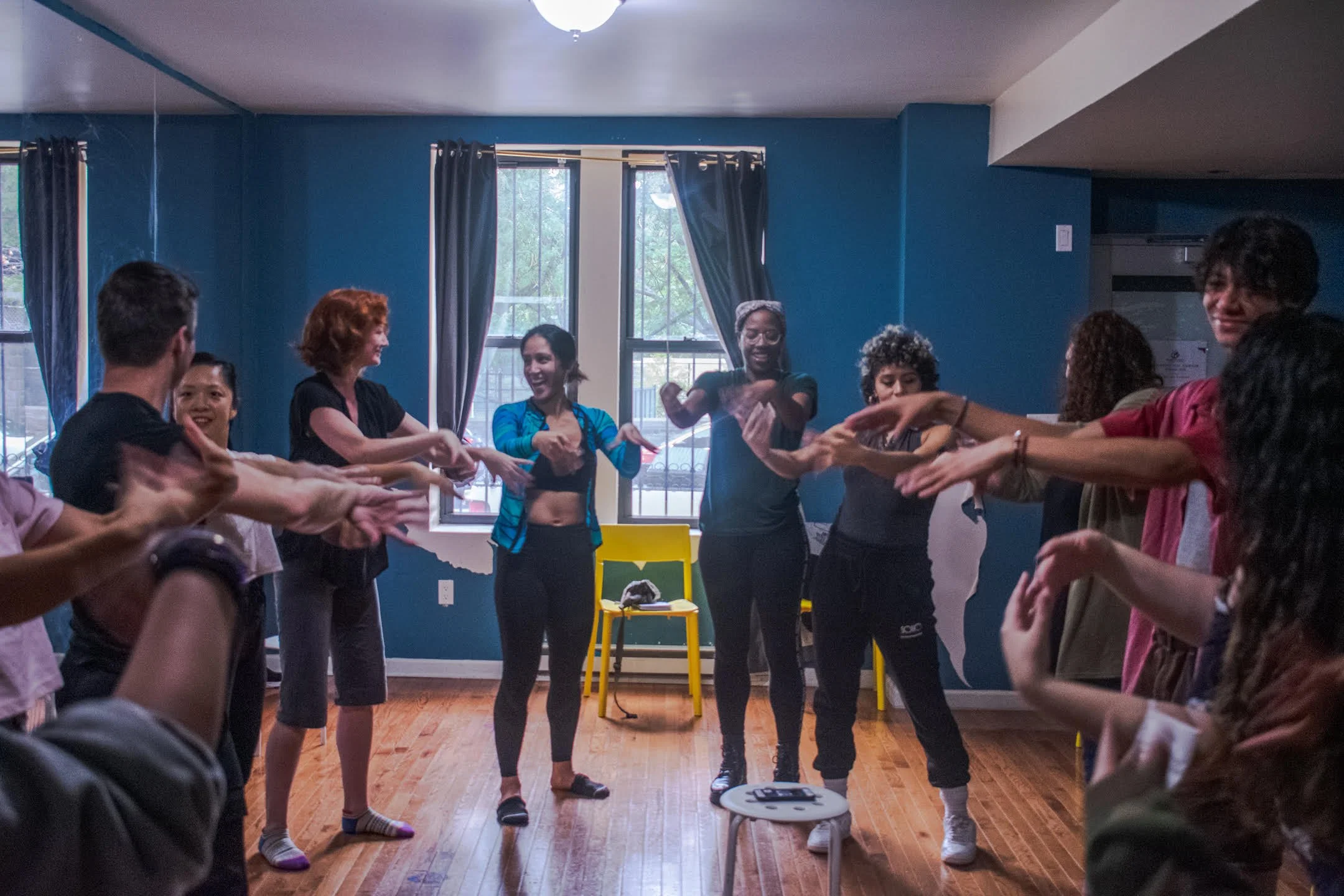
Drama Therapy Groups
Drama therapy uses creativity, play, metaphor, storytelling, movement, and role exploration to help participants express themselves and connect with others.
A drama therapy group might include conversation, embodied warm-ups, improvisation, creative writing, imagery, storytelling, or the exploration of fictional and personal roles. Every activity is offered with choice, and you can participate in ways that feel comfortable and meaningful to you.
Drama therapy can be especially helpful when words alone feel limiting. It provides multiple ways to explore an experience without requiring you to speak about everything directly.
Through a drama therapy group, you may:
Discover new ways to express thoughts and feelings
Build confidence and spontaneity
Feel less isolated in your experiences
Explore identity and the roles you hold
Practice communication and boundary setting
Strengthen your ability to connect with others
Experience more creativity, flexibility, and play in your life
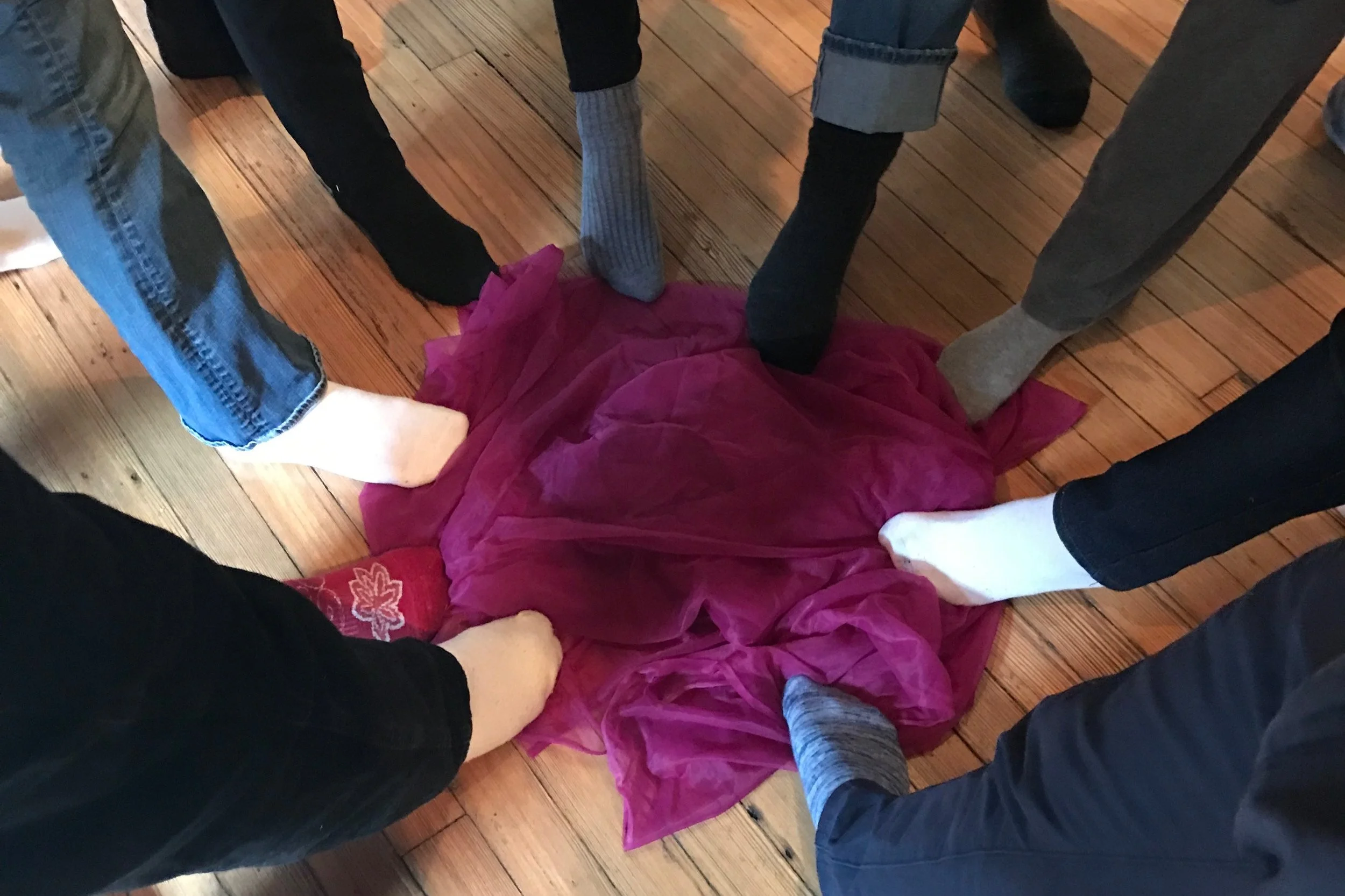
Psychodrama Groups
Psychodrama is an action-based form of group therapy that helps bring experiences, relationships, and internal conflicts into the room so they can be explored in the present.
Rather than only talking about something that happened, psychodrama may allow you to step into a scene, speak to someone through an empty chair, explore different parts of yourself, practice a conversation, or imagine a different way forward. Other group members may support the work by witnessing, sharing, or taking roles within an enactment.
You are always involved in deciding how your story is explored. Psychodrama is guided with attention to consent, pacing, emotional safety, and the needs of the entire group.
You do not need to be the person whose story is being explored to benefit. Participating in someone else’s psychodrama, or simply witnessing it, can bring insight, emotion, and connection to your own experience.
Psychodrama can help you:
See familiar experiences from a new perspective
Give voice to thoughts or feelings that have remained unspoken
Explore relationship patterns as they happen
Practice difficult conversations and new responses
Connect past experiences with present-day patterns
Experience support and validation from others
Move from understanding something intellectually to experiencing a new possibility
UPCOMING GROUPS:
Between Story & Possibility: Exploring the Roles We Play
An Eight-Week Drama Therapy Group
Forming Now for Winter 2027 | In Person
8 Weeks | 2-Hour Sessions | $850
NYC Midtown location | Dates, Days & Times TBD
-
What stories have shaped you? What roles feel familiar and which ones are waiting for a chance to emerge?
Join me for an eight-week therapeutic group exploring the roles we play, the stories we carry, and the possibilities we have yet to imagine. Through drama therapy and embodied work, we’ll use creative exploration, movement, storytelling, and enactment to deepen self-awareness, invite spontaneity, and practice new ways of being and relating.
Together, we’ll make room for play, reflection, connection, and discovery. You don’t need to be an actor or know what you want to explore before you arrive. We’ll build connection over time, with space to participate at your own pace.
Our eight-week journey:
Week 1 Making Connections: Connecting with yourself and the group.
Week 2 Inviting Aliveness: Exploring spontaneity and being in the moment.
Week 3 Role Call: Discovering the roles you play and those you long to explore.
Week 4 Meeting the Obstacle: Getting curious about what stands in the way and what it might reveal.
Week 5 The Stories We Carry: Exploring family and ancestral stories that live within us.
Week 6 Our Collective Story: Discovering where our experiences meet and what we can create together.
Week 7 The Wise One Within: Connecting with inner wisdom and the resources you carry.
Week 8 Imagining What’s Next: Bringing future possibilities into action and carrying the work forward.
No previous drama or acting experience is needed. An initial interview is required to explore whether the group is a good fit for you.
Room for Something New
An Eight-Week Psychodrama Therapy Group
Forming Now for Winter 2027 | In Person
8 Weeks | 3-Hour Sessions | $1200
NYC Midtown location
Dates, Days & Times TBD
-
Sometimes we understand our patterns but still find ourselves living them. This eight-week therapy group offers a space to explore what keeps you stuck, give voice to feelings that have been difficult to express, and practice new ways of relating to yourself and others.
Through psychodrama, we bring experiences, relationships, and inner conflicts into action. You might explore an unfinished conversation, hear from different parts of yourself, or try out a role you want to grow into—all with the support of a therapist and a group working alongside you.
Stepping into action can feel unfamiliar. You don’t need acting experience or a comfort with being in the spotlight. We’ll build connection over time, with room to move at your own pace. Whether you are exploring your own story or participating in someone else’s, there are opportunities to feel seen, discover something new, and connect.
What happens in a session?
Warm-up: Creative activities help us connect, become more comfortable, and discover what needs attention.
Action: With my guidance and the group’s support, we explore stories and experiences through enactment, making space for new perspectives and possibilities.
Sharing: We reflect on what touched us personally, offering connection through shared experience.
Curious about joining? Reach out to learn more and schedule a conversation about whether this group might be a good fit for you.

Therapy Intensives
Sometimes you may want more time and space than a traditional weekly session allows. A therapy intensive offers an extended session in which we can focus on a particular issue, memory, transition, or pattern without having to stop just as the work begins to deepen.
Intensives may incorporate attachment-focused EMDR, psychodrama, imagery, resourcing, and other experiential approaches. They can be especially helpful when you want focused support around a specific concern, feel stuck in an established pattern, or would like to do deeper work within a contained period of time.
A therapy intensive is not about moving faster than your system is ready to move. The additional time allows us to slow down, prepare thoughtfully, engage the work with care, and create space for grounding and integration before the session ends.
Intensives may be offered as part of ongoing therapy or as a short-term, focused experience following an initial consultation and assessment.